A Guide to Homeopathic Stroke Treatment: Repertory Analysis & Remedy Indications
Homeopathic Stroke Treatment: Primary Remedies, Symptoms & Decision Tree
This guide details specific symptoms, repertory grades, and acute vs. recovery indications.
Materia Medica of Primary Stroke Remedies
1. ACON. (Aconitum Napellus)
-
Phase: Very early/Acute stage (immediately after the event).
-
Key Symptoms:
-
Sudden onset, often triggered by fear, shock, or exposure to cold, dry wind.
-
High blood pressure with a full, bounding pulse.
-
Mental State: Intense fear of death; extreme anxiety and restlessness.
-
Physical: Numbness and tingling (formication) in the affected parts (arm/leg) before paralysis sets in completely.
-
2. ANAC. (Anacardium Orientale)
-
Phase: After-effects (Sequelae) or mental decline.
-
Key Symptoms:
-
Mental State: Profound loss of memory following a stroke. The patient may feel they have "two wills" (internal conflict).
-
Physical: Sensation of a "hoop" or "band" around body parts.
-
Modalities: Symptoms often feel better while eating.
-
3. ARN. (Arnica Montana)
-
Phase: Acute (Trauma/Hemorrhage) and Recovery.
-
Key Symptoms:
-
The specific remedy for hemorrhagic stroke (bursting of blood vessels).
-
Sore, bruised feeling all over the body.
-
Mental State: The patient answers questions correctly but then falls back into a stupor; says "There is nothing the matter with me" despite being ill.
-
Physical: Involuntary discharge of stool and urine during stupor. Head feels hot, body feels cold.
-
4. BAR-C. (Baryta Carbonica)
-
Phase: Chronic/Old Age (Prevention or Sequelae).
-
Key Symptoms:
-
Indicated for stroke in the elderly with premature senility or dementia.
-
Physical: Paralysis of the tongue (swallowing difficulties, slurred speech).
-
Mental State: Childish behavior; loss of memory; confusion.
-
Physical: Cold feet; general weakness of the body and mind.
-
5. BELL. (Belladonna)
-
Phase: Acute Congestive Phase.
-
Key Symptoms:
-
Appearance: Red, hot face; throbbing carotid arteries (neck); dilated pupils; wild look in eyes.
-
Onset: Sudden and violent.
-
Physical: Twitching, jerking, or spasms. Right-sided paralysis (hemiplegia) is common.
-
Modality: Worse from jarring, light, or noise.
-
6. BRY. (Bryonia Alba)
-
Phase: Acute or Sub-acute.
-
Key Symptoms:
-
Modality: Worse from the slightest motion. The patient wants to lie perfectly still.
-
Mental State: Irritable; talks about business affairs even when delirious.
-
Physical: Dry mouth; immense thirst. Congestion to the head with a bursting headache.
-
7. CAUST. (Causticum)
-
Phase: Chronic Paralysis/Rehabilitation.
-
Key Symptoms:
-
Side: Frequently indicated for Right-sided paralysis.
-
Physical: Contractures of tendons (limbs drawn up). Paralysis of single parts (e.g., vocal cords causing aphonia/loss of voice, eyelids causing ptosis).
-
Modality: Worse in clear, dry weather; better in damp/wet weather.
-
8. COCC. (Cocculus Indicus)
-
Phase: Vertigo/Pre-stroke or associated paralysis.
-
Key Symptoms:
-
Onset: Stroke preceded by severe vertigo (dizziness) and nausea.
-
Physical: Great weakness of the neck muscles (head feels too heavy to hold up). Paralysis of the lower limbs.
-
Cause: often triggered by loss of sleep or nursing loved ones (caregiver burnout).
-
9. GELS. (Gelsemium)
-
Phase: Onset or Paralytic weakness.
-
Key Symptoms:
-
Physical: Heaviness of the eyelids (drooping); heavy limbs; trembling and tremors.
-
Mental State: Dullness, dizziness, and drowsiness (The "3 Ds").
-
Speech: Thick, heavy speech; tongue feels too thick for the mouth.
-
Modality: Absence of thirst.
-
10. GLON. (Glonoinum)
-
Phase: Hyper-acute Congestion (High BP crisis).
-
Key Symptoms:
-
Sensation: Bursting headache; feels as if the head would explode.
-
Physical: Visible throbbing of arteries in the neck and head.
-
Modality: Cannot bear any heat around the head; worse from the sun.
-
Difference from Belladonna: Glonoinum has more intense surging of blood (irregular) compared to Belladonna's constant heat.
-
11. HYDR-AC. (Hydrocyanic Acid)
-
Phase: Sudden Collapse ("Thunderbolt").
-
Key Symptoms:
-
Onset: Sudden, violent collapse. The patient falls with a shriek.
-
Physical: Cyanosis (blue skin); coldness; prolonged fainting spells.
-
Respiration: Gasping, irregular breathing (Cheyne-Stokes respiration).
-
Indication: When the stroke threatens immediate heart/respiratory failure.
-
12. IP. (Ipecacuanha)
-
Phase: Spasmodic or Hemorrhagic with Nausea.
-
Key Symptoms:
-
Key Note: Persistent, constant nausea that is not relieved by vomiting.
-
Physical: Difficulty breathing (suffocative wheezing) accompanying the stroke. Bright red hemorrhage (if hemorrhagic stroke).
-
13. LACH. (Lachesis Mutus)
-
Phase: Acute or Chronic.
-
Key Symptoms:
-
Side: Frequently indicated for Left-sided paralysis.
-
Modality: Worse after sleep (wakes up into the aggravation).
-
Physical: Intolerance of tight clothing around the neck or waist.
-
Speech: Aphasia (cannot find the right words) or Loquacity (talking excessively and rapidly).
-
14. NUX-V. (Nux Vomica)
-
Phase: Recovery/Rehabilitation (or prevention in high-stress types).
-
Key Symptoms:
-
Constitution: The "Type A" executive—sedentary, stressed, irritable, overindulges in coffee/alcohol/rich food.
-
Physical: Paresis (incomplete paralysis) rather than full paralysis. Dragging of feet.
-
Modality: Chilliness; worse in cold air.
-
15. OP. (Opium)
-
Phase: Deep Coma/Stupor.
-
Key Symptoms:
-
Appearance: Face is dark red, bloated, and hot.
-
Respiration: Stertorous breathing (loud snoring/rattling) and cheeks blow out during expiration.
-
Mental State: Unconsciousness; cannot be aroused. Painlessness of all complaints.
-
Physical: Jaw dropped; eyes half-open.
-
16. PLB. (Plumbum Metallicum)
-
Phase: Chronic Sclerosis/Atrophy.
-
Key Symptoms:
-
Physical: Progressive muscular atrophy (wasting away of muscles) in the paralyzed parts.
-
Specifics: Wrist drop; extensors are more affected than flexors.
-
Associated: Chronic constipation; blue line on gums (lead line).
-
How to Select the Right Medicine & Potency?
For best results, choose a homeopathic remedy that closely matches your symptoms or follow your doctor’s recommendation.
Suggested Potencies:
✔ Mild symptoms or children – 6C
✔ Acute conditions – 30C or 200C
✔ Chronic conditions or higher potencies – Consult a homeopath for the appropriate potency
A professional homeopath can offer personalized guidance to ensure safe and effective treatment.
| Attribute | Details |
|---|---|
| Size / Presentation | 30 ml sealed Bottles |
| Manufacturer | Homeomart / SBL / Schwabe / Simila (any) |
| Form | Drops |
| Option Weight | 75 gms (unit wt) |
| Potency | 30C – 1M |
| Target Customer | Stroke patients / post-stroke recovery / neurologic support |
| Source | Homeopathic Repertory (Lotus Materia Medica by Robin Murphy MD) |
Product Information
Product Information
Shipping & Returns
Shipping & Returns
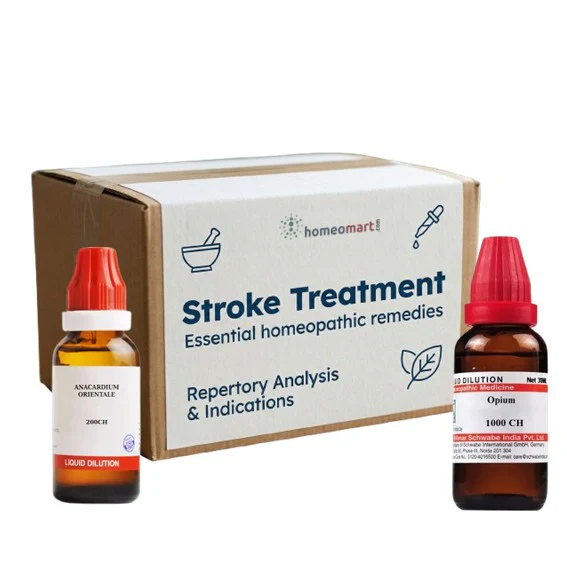
A Guide to Homeopathic Stroke Treatment: Repertory Analysis & Remedy Indications
A Guide to Homeopathic Stroke Treatment: Repertory Analysis & Remedy Indications
Homeopathic Stroke Treatment: Primary Remedies, Symptoms & Decision Tree
This guide details specific symptoms, repertory grades, and acute vs. recovery indications.
Materia Medica of Primary Stroke Remedies
1. ACON. (Aconitum Napellus)
-
Phase: Very early/Acute stage (immediately after the event).
-
Key Symptoms:
-
Sudden onset, often triggered by fear, shock, or exposure to cold, dry wind.
-
High blood pressure with a full, bounding pulse.
-
Mental State: Intense fear of death; extreme anxiety and restlessness.
-
Physical: Numbness and tingling (formication) in the affected parts (arm/leg) before paralysis sets in completely.
-
2. ANAC. (Anacardium Orientale)
-
Phase: After-effects (Sequelae) or mental decline.
-
Key Symptoms:
-
Mental State: Profound loss of memory following a stroke. The patient may feel they have "two wills" (internal conflict).
-
Physical: Sensation of a "hoop" or "band" around body parts.
-
Modalities: Symptoms often feel better while eating.
-
3. ARN. (Arnica Montana)
-
Phase: Acute (Trauma/Hemorrhage) and Recovery.
-
Key Symptoms:
-
The specific remedy for hemorrhagic stroke (bursting of blood vessels).
-
Sore, bruised feeling all over the body.
-
Mental State: The patient answers questions correctly but then falls back into a stupor; says "There is nothing the matter with me" despite being ill.
-
Physical: Involuntary discharge of stool and urine during stupor. Head feels hot, body feels cold.
-
4. BAR-C. (Baryta Carbonica)
-
Phase: Chronic/Old Age (Prevention or Sequelae).
-
Key Symptoms:
-
Indicated for stroke in the elderly with premature senility or dementia.
-
Physical: Paralysis of the tongue (swallowing difficulties, slurred speech).
-
Mental State: Childish behavior; loss of memory; confusion.
-
Physical: Cold feet; general weakness of the body and mind.
-
5. BELL. (Belladonna)
-
Phase: Acute Congestive Phase.
-
Key Symptoms:
-
Appearance: Red, hot face; throbbing carotid arteries (neck); dilated pupils; wild look in eyes.
-
Onset: Sudden and violent.
-
Physical: Twitching, jerking, or spasms. Right-sided paralysis (hemiplegia) is common.
-
Modality: Worse from jarring, light, or noise.
-
6. BRY. (Bryonia Alba)
-
Phase: Acute or Sub-acute.
-
Key Symptoms:
-
Modality: Worse from the slightest motion. The patient wants to lie perfectly still.
-
Mental State: Irritable; talks about business affairs even when delirious.
-
Physical: Dry mouth; immense thirst. Congestion to the head with a bursting headache.
-
7. CAUST. (Causticum)
-
Phase: Chronic Paralysis/Rehabilitation.
-
Key Symptoms:
-
Side: Frequently indicated for Right-sided paralysis.
-
Physical: Contractures of tendons (limbs drawn up). Paralysis of single parts (e.g., vocal cords causing aphonia/loss of voice, eyelids causing ptosis).
-
Modality: Worse in clear, dry weather; better in damp/wet weather.
-
8. COCC. (Cocculus Indicus)
-
Phase: Vertigo/Pre-stroke or associated paralysis.
-
Key Symptoms:
-
Onset: Stroke preceded by severe vertigo (dizziness) and nausea.
-
Physical: Great weakness of the neck muscles (head feels too heavy to hold up). Paralysis of the lower limbs.
-
Cause: often triggered by loss of sleep or nursing loved ones (caregiver burnout).
-
9. GELS. (Gelsemium)
-
Phase: Onset or Paralytic weakness.
-
Key Symptoms:
-
Physical: Heaviness of the eyelids (drooping); heavy limbs; trembling and tremors.
-
Mental State: Dullness, dizziness, and drowsiness (The "3 Ds").
-
Speech: Thick, heavy speech; tongue feels too thick for the mouth.
-
Modality: Absence of thirst.
-
10. GLON. (Glonoinum)
-
Phase: Hyper-acute Congestion (High BP crisis).
-
Key Symptoms:
-
Sensation: Bursting headache; feels as if the head would explode.
-
Physical: Visible throbbing of arteries in the neck and head.
-
Modality: Cannot bear any heat around the head; worse from the sun.
-
Difference from Belladonna: Glonoinum has more intense surging of blood (irregular) compared to Belladonna's constant heat.
-
11. HYDR-AC. (Hydrocyanic Acid)
-
Phase: Sudden Collapse ("Thunderbolt").
-
Key Symptoms:
-
Onset: Sudden, violent collapse. The patient falls with a shriek.
-
Physical: Cyanosis (blue skin); coldness; prolonged fainting spells.
-
Respiration: Gasping, irregular breathing (Cheyne-Stokes respiration).
-
Indication: When the stroke threatens immediate heart/respiratory failure.
-
12. IP. (Ipecacuanha)
-
Phase: Spasmodic or Hemorrhagic with Nausea.
-
Key Symptoms:
-
Key Note: Persistent, constant nausea that is not relieved by vomiting.
-
Physical: Difficulty breathing (suffocative wheezing) accompanying the stroke. Bright red hemorrhage (if hemorrhagic stroke).
-
13. LACH. (Lachesis Mutus)
-
Phase: Acute or Chronic.
-
Key Symptoms:
-
Side: Frequently indicated for Left-sided paralysis.
-
Modality: Worse after sleep (wakes up into the aggravation).
-
Physical: Intolerance of tight clothing around the neck or waist.
-
Speech: Aphasia (cannot find the right words) or Loquacity (talking excessively and rapidly).
-
14. NUX-V. (Nux Vomica)
-
Phase: Recovery/Rehabilitation (or prevention in high-stress types).
-
Key Symptoms:
-
Constitution: The "Type A" executive—sedentary, stressed, irritable, overindulges in coffee/alcohol/rich food.
-
Physical: Paresis (incomplete paralysis) rather than full paralysis. Dragging of feet.
-
Modality: Chilliness; worse in cold air.
-
15. OP. (Opium)
-
Phase: Deep Coma/Stupor.
-
Key Symptoms:
-
Appearance: Face is dark red, bloated, and hot.
-
Respiration: Stertorous breathing (loud snoring/rattling) and cheeks blow out during expiration.
-
Mental State: Unconsciousness; cannot be aroused. Painlessness of all complaints.
-
Physical: Jaw dropped; eyes half-open.
-
16. PLB. (Plumbum Metallicum)
-
Phase: Chronic Sclerosis/Atrophy.
-
Key Symptoms:
-
Physical: Progressive muscular atrophy (wasting away of muscles) in the paralyzed parts.
-
Specifics: Wrist drop; extensors are more affected than flexors.
-
Associated: Chronic constipation; blue line on gums (lead line).
-
How to Select the Right Medicine & Potency?
For best results, choose a homeopathic remedy that closely matches your symptoms or follow your doctor’s recommendation.
Suggested Potencies:
✔ Mild symptoms or children – 6C
✔ Acute conditions – 30C or 200C
✔ Chronic conditions or higher potencies – Consult a homeopath for the appropriate potency
A professional homeopath can offer personalized guidance to ensure safe and effective treatment.
| Attribute | Details |
|---|---|
| Size / Presentation | 30 ml sealed Bottles |
| Manufacturer | Homeomart / SBL / Schwabe / Simila (any) |
| Form | Drops |
| Option Weight | 75 gms (unit wt) |
| Potency | 30C – 1M |
| Target Customer | Stroke patients / post-stroke recovery / neurologic support |
| Source | Homeopathic Repertory (Lotus Materia Medica by Robin Murphy MD) |
Original: $2.06
-70%$2.06
$0.62Product Information
Product Information
Shipping & Returns
Shipping & Returns
Description
Homeopathic Stroke Treatment: Primary Remedies, Symptoms & Decision Tree
This guide details specific symptoms, repertory grades, and acute vs. recovery indications.
Materia Medica of Primary Stroke Remedies
1. ACON. (Aconitum Napellus)
-
Phase: Very early/Acute stage (immediately after the event).
-
Key Symptoms:
-
Sudden onset, often triggered by fear, shock, or exposure to cold, dry wind.
-
High blood pressure with a full, bounding pulse.
-
Mental State: Intense fear of death; extreme anxiety and restlessness.
-
Physical: Numbness and tingling (formication) in the affected parts (arm/leg) before paralysis sets in completely.
-
2. ANAC. (Anacardium Orientale)
-
Phase: After-effects (Sequelae) or mental decline.
-
Key Symptoms:
-
Mental State: Profound loss of memory following a stroke. The patient may feel they have "two wills" (internal conflict).
-
Physical: Sensation of a "hoop" or "band" around body parts.
-
Modalities: Symptoms often feel better while eating.
-
3. ARN. (Arnica Montana)
-
Phase: Acute (Trauma/Hemorrhage) and Recovery.
-
Key Symptoms:
-
The specific remedy for hemorrhagic stroke (bursting of blood vessels).
-
Sore, bruised feeling all over the body.
-
Mental State: The patient answers questions correctly but then falls back into a stupor; says "There is nothing the matter with me" despite being ill.
-
Physical: Involuntary discharge of stool and urine during stupor. Head feels hot, body feels cold.
-
4. BAR-C. (Baryta Carbonica)
-
Phase: Chronic/Old Age (Prevention or Sequelae).
-
Key Symptoms:
-
Indicated for stroke in the elderly with premature senility or dementia.
-
Physical: Paralysis of the tongue (swallowing difficulties, slurred speech).
-
Mental State: Childish behavior; loss of memory; confusion.
-
Physical: Cold feet; general weakness of the body and mind.
-
5. BELL. (Belladonna)
-
Phase: Acute Congestive Phase.
-
Key Symptoms:
-
Appearance: Red, hot face; throbbing carotid arteries (neck); dilated pupils; wild look in eyes.
-
Onset: Sudden and violent.
-
Physical: Twitching, jerking, or spasms. Right-sided paralysis (hemiplegia) is common.
-
Modality: Worse from jarring, light, or noise.
-
6. BRY. (Bryonia Alba)
-
Phase: Acute or Sub-acute.
-
Key Symptoms:
-
Modality: Worse from the slightest motion. The patient wants to lie perfectly still.
-
Mental State: Irritable; talks about business affairs even when delirious.
-
Physical: Dry mouth; immense thirst. Congestion to the head with a bursting headache.
-
7. CAUST. (Causticum)
-
Phase: Chronic Paralysis/Rehabilitation.
-
Key Symptoms:
-
Side: Frequently indicated for Right-sided paralysis.
-
Physical: Contractures of tendons (limbs drawn up). Paralysis of single parts (e.g., vocal cords causing aphonia/loss of voice, eyelids causing ptosis).
-
Modality: Worse in clear, dry weather; better in damp/wet weather.
-
8. COCC. (Cocculus Indicus)
-
Phase: Vertigo/Pre-stroke or associated paralysis.
-
Key Symptoms:
-
Onset: Stroke preceded by severe vertigo (dizziness) and nausea.
-
Physical: Great weakness of the neck muscles (head feels too heavy to hold up). Paralysis of the lower limbs.
-
Cause: often triggered by loss of sleep or nursing loved ones (caregiver burnout).
-
9. GELS. (Gelsemium)
-
Phase: Onset or Paralytic weakness.
-
Key Symptoms:
-
Physical: Heaviness of the eyelids (drooping); heavy limbs; trembling and tremors.
-
Mental State: Dullness, dizziness, and drowsiness (The "3 Ds").
-
Speech: Thick, heavy speech; tongue feels too thick for the mouth.
-
Modality: Absence of thirst.
-
10. GLON. (Glonoinum)
-
Phase: Hyper-acute Congestion (High BP crisis).
-
Key Symptoms:
-
Sensation: Bursting headache; feels as if the head would explode.
-
Physical: Visible throbbing of arteries in the neck and head.
-
Modality: Cannot bear any heat around the head; worse from the sun.
-
Difference from Belladonna: Glonoinum has more intense surging of blood (irregular) compared to Belladonna's constant heat.
-
11. HYDR-AC. (Hydrocyanic Acid)
-
Phase: Sudden Collapse ("Thunderbolt").
-
Key Symptoms:
-
Onset: Sudden, violent collapse. The patient falls with a shriek.
-
Physical: Cyanosis (blue skin); coldness; prolonged fainting spells.
-
Respiration: Gasping, irregular breathing (Cheyne-Stokes respiration).
-
Indication: When the stroke threatens immediate heart/respiratory failure.
-
12. IP. (Ipecacuanha)
-
Phase: Spasmodic or Hemorrhagic with Nausea.
-
Key Symptoms:
-
Key Note: Persistent, constant nausea that is not relieved by vomiting.
-
Physical: Difficulty breathing (suffocative wheezing) accompanying the stroke. Bright red hemorrhage (if hemorrhagic stroke).
-
13. LACH. (Lachesis Mutus)
-
Phase: Acute or Chronic.
-
Key Symptoms:
-
Side: Frequently indicated for Left-sided paralysis.
-
Modality: Worse after sleep (wakes up into the aggravation).
-
Physical: Intolerance of tight clothing around the neck or waist.
-
Speech: Aphasia (cannot find the right words) or Loquacity (talking excessively and rapidly).
-
14. NUX-V. (Nux Vomica)
-
Phase: Recovery/Rehabilitation (or prevention in high-stress types).
-
Key Symptoms:
-
Constitution: The "Type A" executive—sedentary, stressed, irritable, overindulges in coffee/alcohol/rich food.
-
Physical: Paresis (incomplete paralysis) rather than full paralysis. Dragging of feet.
-
Modality: Chilliness; worse in cold air.
-
15. OP. (Opium)
-
Phase: Deep Coma/Stupor.
-
Key Symptoms:
-
Appearance: Face is dark red, bloated, and hot.
-
Respiration: Stertorous breathing (loud snoring/rattling) and cheeks blow out during expiration.
-
Mental State: Unconsciousness; cannot be aroused. Painlessness of all complaints.
-
Physical: Jaw dropped; eyes half-open.
-
16. PLB. (Plumbum Metallicum)
-
Phase: Chronic Sclerosis/Atrophy.
-
Key Symptoms:
-
Physical: Progressive muscular atrophy (wasting away of muscles) in the paralyzed parts.
-
Specifics: Wrist drop; extensors are more affected than flexors.
-
Associated: Chronic constipation; blue line on gums (lead line).
-
How to Select the Right Medicine & Potency?
For best results, choose a homeopathic remedy that closely matches your symptoms or follow your doctor’s recommendation.
Suggested Potencies:
✔ Mild symptoms or children – 6C
✔ Acute conditions – 30C or 200C
✔ Chronic conditions or higher potencies – Consult a homeopath for the appropriate potency
A professional homeopath can offer personalized guidance to ensure safe and effective treatment.
| Attribute | Details |
|---|---|
| Size / Presentation | 30 ml sealed Bottles |
| Manufacturer | Homeomart / SBL / Schwabe / Simila (any) |
| Form | Drops |
| Option Weight | 75 gms (unit wt) |
| Potency | 30C – 1M |
| Target Customer | Stroke patients / post-stroke recovery / neurologic support |
| Source | Homeopathic Repertory (Lotus Materia Medica by Robin Murphy MD) |