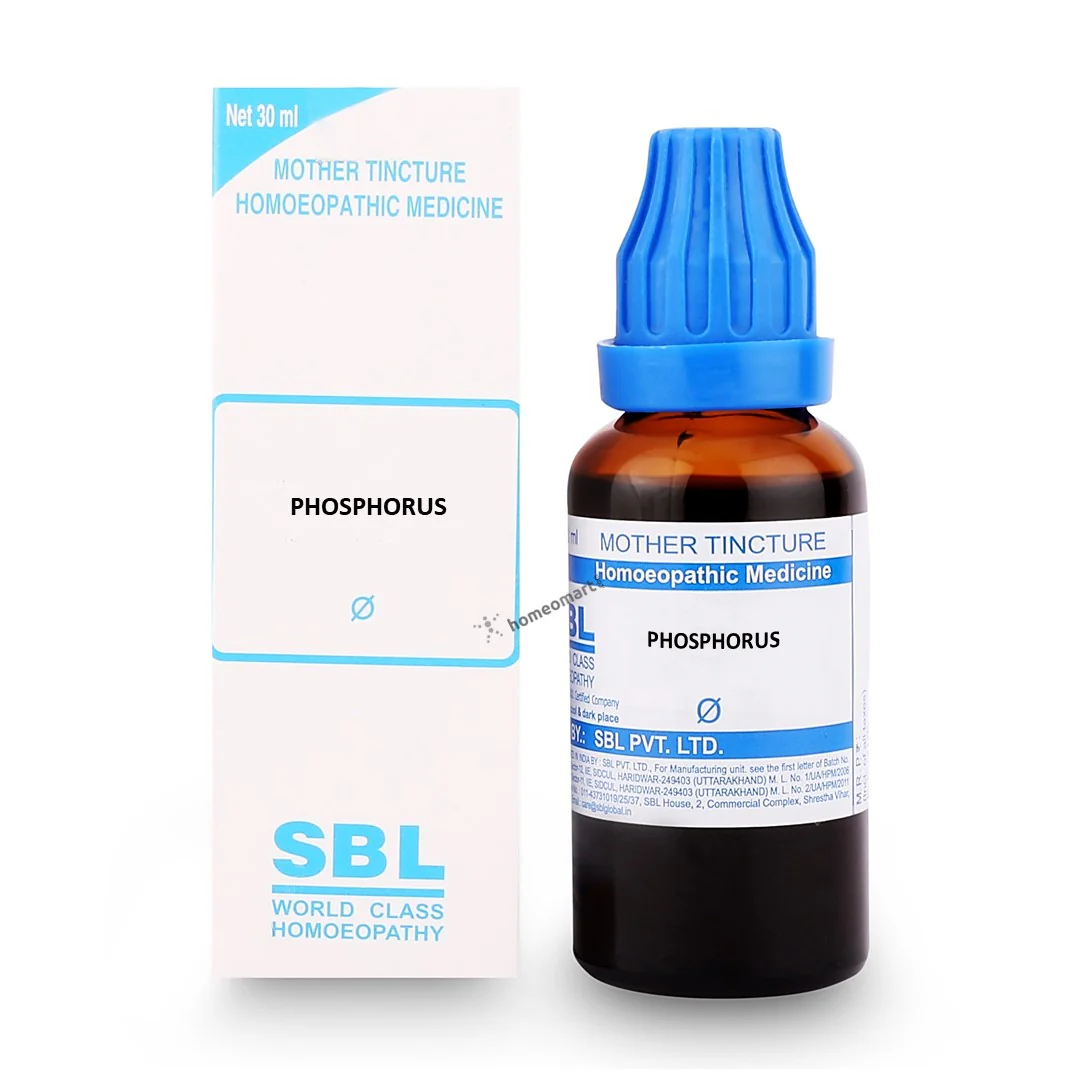
Phosphorus Homeopathic Dilution – Hair Fall, Bleeding & Liver Support
About Phosphorus Homeopathy Dilution (6C, 30C, 200C, 1M, 10M Potency)
Phosphorus Homeopathic Dilution is prepared through the careful trituration of red amorphous phosphorus, following classical homeopathic pharmacopeia methods. It is a deep-acting constitutional remedy widely used for managing a broad spectrum of physical, mental, and metabolic conditions.
This medicine is known for its versatility and is commonly used in conditions such as anxiety, fears, excessive hair fall, dandruff, cough, bronchitis, pneumonia, nosebleeds, gastritis, glaucoma, hoarseness of voice, and excessive menstrual bleeding. To explore detailed medicine characteristics, therapeutic scope, and remedy comparisons, refer to the complete compendium here.
Phosphorus – Key Medicine Characteristics
- Well suited to nervous, sensitive young individuals who grow rapidly and tend to stoop.
- Has a marked action on the mind, spinal cord, and peripheral nerves.
- Acts strongly on mucous membranes, helping manage irritation, inflammation, and degeneration.
- Influences bones by slowing destructive processes, especially affecting the lower jaw and tibia.
- Exerts a significant action on blood and blood vessels, making it a powerful anti-haemorrhagic remedy helpful in controlling bleeding tendencies.
Caution: Causticum is inimical to Phosphorus and should not be used immediately before or after it.
Antidotes: Coffea Cruda, Mezereum, Nux Vomica, and Terebinthina may be used to neutralize the action of Phosphorus when required.
What Do Doctors Commonly Recommend Phosphorus For?
Dr. K. S. Gopi recommends Phosphorus for:
Phosphorus 30 is highly effective when cold drinks or cold water give temporary relief from burning in the chest and abdomen, especially in cases of heartburn due to acid reflux. Sour belching after meals is common, with vomiting appearing some time after drinking.
Phosphorus 30 is a leading remedy for extremely dry hair at the roots and is particularly useful when such dryness is accompanied by excessive hair fall.
Phosphorus 200 is often prescribed in cases of disc bulge when a characteristic burning sensation in the spine accompanies back pain, especially pain that worsens when rising from a stooped posture.
Phosphorus 30 is also used in cases of necrosis (death of body tissues), particularly involving bone and mucous membranes.
Dr. Vikas Sharma recommends Phosphorus for:
Hair fall and dandruff — especially when hair falls in large bunches. It is beneficial in alopecia areata and premature greying.
Nasal complaints such as chronic cold, recurrent nosebleeds (epistaxis), and bleeding nasal polyps.
Eye disorders — supports vision in glaucoma, helps slow cataract progression, and relieves floating spots before the eyes (muscae volitantes).
Oral and gum issues including inflamed or bleeding gums as seen in gingivitis.
Gastric conditions such as gastritis and stomach ulcers, where it helps reduce inflammation and promotes healing.
Respiratory complaints including cough, bronchitis, pneumonia, and chest congestion.
A top-grade remedy for inflammation of the larynx, helping restore voice quality and relieve hoarseness.
Liver disorders including hepatitis, enlargement of the liver, fatty liver, and cirrhosis.
Dr. Jyoti describes Phosphorus as a deep-acting polychrest remedy useful in anemia, asthma, joint complaints, various fevers, headaches, fatty liver degeneration, lung affections, ulcers, and chronic weakness.
Phosphorus in Pancreatitis
Phosphorus is a prominent remedy for pancreatitis, especially when stools are greasy and oily. Associated symptoms may include abdominal tenderness, painful distension, incarcerated flatus, jaundice, and vomiting of sour, bitter, or undigested food. Stools are often profuse and mixed with white mucus.
Phosphorus as per Boericke Materia Medica
Phosphorus profoundly affects metabolism, irritating and degenerating mucous and serous membranes, inflaming the spinal cord and nerves, and causing paralysis. It acts destructively on bones (notably the lower jaw and tibia) and disorganizes the blood, leading to fatty degeneration of tissues, hemorrhages, and hematogenous jaundice.
It is especially suited to tall, slender individuals with narrow chests, thin transparent skin, marked nervous debility, and great sensitivity to light, sound, odors, touch, and weather changes. Sudden prostration, fainting, sweats, shooting pains, and hemorrhagic tendencies are keynote features.
Mind: Great lowness of spirits; easily vexed.
Head: Vertigo, especially in the aged.
Eyes: Cataract, retinal degeneration.
Face: Pale, sickly complexion with dark circles.
Mouth: Swollen, ulcerated, and bleeding gums.
Stomach: Hunger soon after eating; sour taste and eructations.
Male: Sexual weakness with excessive desire.
Female: Metritis, chlorosis, phlebitis, fistulous tracts after mammary abscess.
Product Information
Product Information
Shipping & Returns
Shipping & Returns
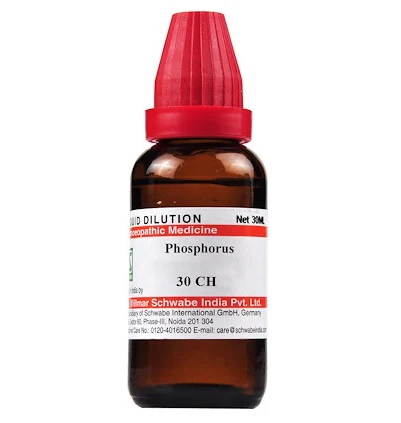
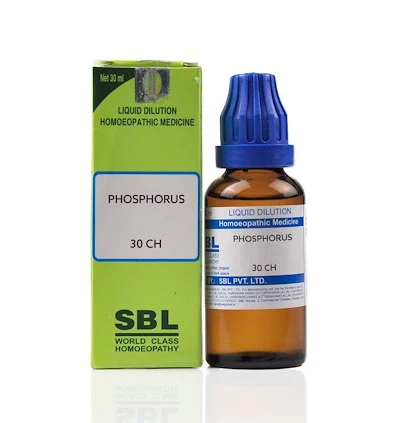


Phosphorus Homeopathic Dilution – Hair Fall, Bleeding & Liver Support
Phosphorus Homeopathic Dilution – Hair Fall, Bleeding & Liver Support
About Phosphorus Homeopathy Dilution (6C, 30C, 200C, 1M, 10M Potency)
Phosphorus Homeopathic Dilution is prepared through the careful trituration of red amorphous phosphorus, following classical homeopathic pharmacopeia methods. It is a deep-acting constitutional remedy widely used for managing a broad spectrum of physical, mental, and metabolic conditions.
This medicine is known for its versatility and is commonly used in conditions such as anxiety, fears, excessive hair fall, dandruff, cough, bronchitis, pneumonia, nosebleeds, gastritis, glaucoma, hoarseness of voice, and excessive menstrual bleeding. To explore detailed medicine characteristics, therapeutic scope, and remedy comparisons, refer to the complete compendium here.
Phosphorus – Key Medicine Characteristics
- Well suited to nervous, sensitive young individuals who grow rapidly and tend to stoop.
- Has a marked action on the mind, spinal cord, and peripheral nerves.
- Acts strongly on mucous membranes, helping manage irritation, inflammation, and degeneration.
- Influences bones by slowing destructive processes, especially affecting the lower jaw and tibia.
- Exerts a significant action on blood and blood vessels, making it a powerful anti-haemorrhagic remedy helpful in controlling bleeding tendencies.
Caution: Causticum is inimical to Phosphorus and should not be used immediately before or after it.
Antidotes: Coffea Cruda, Mezereum, Nux Vomica, and Terebinthina may be used to neutralize the action of Phosphorus when required.
What Do Doctors Commonly Recommend Phosphorus For?
Dr. K. S. Gopi recommends Phosphorus for:
Phosphorus 30 is highly effective when cold drinks or cold water give temporary relief from burning in the chest and abdomen, especially in cases of heartburn due to acid reflux. Sour belching after meals is common, with vomiting appearing some time after drinking.
Phosphorus 30 is a leading remedy for extremely dry hair at the roots and is particularly useful when such dryness is accompanied by excessive hair fall.
Phosphorus 200 is often prescribed in cases of disc bulge when a characteristic burning sensation in the spine accompanies back pain, especially pain that worsens when rising from a stooped posture.
Phosphorus 30 is also used in cases of necrosis (death of body tissues), particularly involving bone and mucous membranes.
Dr. Vikas Sharma recommends Phosphorus for:
Hair fall and dandruff — especially when hair falls in large bunches. It is beneficial in alopecia areata and premature greying.
Nasal complaints such as chronic cold, recurrent nosebleeds (epistaxis), and bleeding nasal polyps.
Eye disorders — supports vision in glaucoma, helps slow cataract progression, and relieves floating spots before the eyes (muscae volitantes).
Oral and gum issues including inflamed or bleeding gums as seen in gingivitis.
Gastric conditions such as gastritis and stomach ulcers, where it helps reduce inflammation and promotes healing.
Respiratory complaints including cough, bronchitis, pneumonia, and chest congestion.
A top-grade remedy for inflammation of the larynx, helping restore voice quality and relieve hoarseness.
Liver disorders including hepatitis, enlargement of the liver, fatty liver, and cirrhosis.
Dr. Jyoti describes Phosphorus as a deep-acting polychrest remedy useful in anemia, asthma, joint complaints, various fevers, headaches, fatty liver degeneration, lung affections, ulcers, and chronic weakness.
Phosphorus in Pancreatitis
Phosphorus is a prominent remedy for pancreatitis, especially when stools are greasy and oily. Associated symptoms may include abdominal tenderness, painful distension, incarcerated flatus, jaundice, and vomiting of sour, bitter, or undigested food. Stools are often profuse and mixed with white mucus.
Phosphorus as per Boericke Materia Medica
Phosphorus profoundly affects metabolism, irritating and degenerating mucous and serous membranes, inflaming the spinal cord and nerves, and causing paralysis. It acts destructively on bones (notably the lower jaw and tibia) and disorganizes the blood, leading to fatty degeneration of tissues, hemorrhages, and hematogenous jaundice.
It is especially suited to tall, slender individuals with narrow chests, thin transparent skin, marked nervous debility, and great sensitivity to light, sound, odors, touch, and weather changes. Sudden prostration, fainting, sweats, shooting pains, and hemorrhagic tendencies are keynote features.
Mind: Great lowness of spirits; easily vexed.
Head: Vertigo, especially in the aged.
Eyes: Cataract, retinal degeneration.
Face: Pale, sickly complexion with dark circles.
Mouth: Swollen, ulcerated, and bleeding gums.
Stomach: Hunger soon after eating; sour taste and eructations.
Male: Sexual weakness with excessive desire.
Female: Metritis, chlorosis, phlebitis, fistulous tracts after mammary abscess.
Original: $1.81
-70%$1.81
$0.54Product Information
Product Information
Shipping & Returns
Shipping & Returns
Description
About Phosphorus Homeopathy Dilution (6C, 30C, 200C, 1M, 10M Potency)
Phosphorus Homeopathic Dilution is prepared through the careful trituration of red amorphous phosphorus, following classical homeopathic pharmacopeia methods. It is a deep-acting constitutional remedy widely used for managing a broad spectrum of physical, mental, and metabolic conditions.
This medicine is known for its versatility and is commonly used in conditions such as anxiety, fears, excessive hair fall, dandruff, cough, bronchitis, pneumonia, nosebleeds, gastritis, glaucoma, hoarseness of voice, and excessive menstrual bleeding. To explore detailed medicine characteristics, therapeutic scope, and remedy comparisons, refer to the complete compendium here.
Phosphorus – Key Medicine Characteristics
- Well suited to nervous, sensitive young individuals who grow rapidly and tend to stoop.
- Has a marked action on the mind, spinal cord, and peripheral nerves.
- Acts strongly on mucous membranes, helping manage irritation, inflammation, and degeneration.
- Influences bones by slowing destructive processes, especially affecting the lower jaw and tibia.
- Exerts a significant action on blood and blood vessels, making it a powerful anti-haemorrhagic remedy helpful in controlling bleeding tendencies.
Caution: Causticum is inimical to Phosphorus and should not be used immediately before or after it.
Antidotes: Coffea Cruda, Mezereum, Nux Vomica, and Terebinthina may be used to neutralize the action of Phosphorus when required.
What Do Doctors Commonly Recommend Phosphorus For?
Dr. K. S. Gopi recommends Phosphorus for:
Phosphorus 30 is highly effective when cold drinks or cold water give temporary relief from burning in the chest and abdomen, especially in cases of heartburn due to acid reflux. Sour belching after meals is common, with vomiting appearing some time after drinking.
Phosphorus 30 is a leading remedy for extremely dry hair at the roots and is particularly useful when such dryness is accompanied by excessive hair fall.
Phosphorus 200 is often prescribed in cases of disc bulge when a characteristic burning sensation in the spine accompanies back pain, especially pain that worsens when rising from a stooped posture.
Phosphorus 30 is also used in cases of necrosis (death of body tissues), particularly involving bone and mucous membranes.
Dr. Vikas Sharma recommends Phosphorus for:
Hair fall and dandruff — especially when hair falls in large bunches. It is beneficial in alopecia areata and premature greying.
Nasal complaints such as chronic cold, recurrent nosebleeds (epistaxis), and bleeding nasal polyps.
Eye disorders — supports vision in glaucoma, helps slow cataract progression, and relieves floating spots before the eyes (muscae volitantes).
Oral and gum issues including inflamed or bleeding gums as seen in gingivitis.
Gastric conditions such as gastritis and stomach ulcers, where it helps reduce inflammation and promotes healing.
Respiratory complaints including cough, bronchitis, pneumonia, and chest congestion.
A top-grade remedy for inflammation of the larynx, helping restore voice quality and relieve hoarseness.
Liver disorders including hepatitis, enlargement of the liver, fatty liver, and cirrhosis.
Dr. Jyoti describes Phosphorus as a deep-acting polychrest remedy useful in anemia, asthma, joint complaints, various fevers, headaches, fatty liver degeneration, lung affections, ulcers, and chronic weakness.
Phosphorus in Pancreatitis
Phosphorus is a prominent remedy for pancreatitis, especially when stools are greasy and oily. Associated symptoms may include abdominal tenderness, painful distension, incarcerated flatus, jaundice, and vomiting of sour, bitter, or undigested food. Stools are often profuse and mixed with white mucus.
Phosphorus as per Boericke Materia Medica
Phosphorus profoundly affects metabolism, irritating and degenerating mucous and serous membranes, inflaming the spinal cord and nerves, and causing paralysis. It acts destructively on bones (notably the lower jaw and tibia) and disorganizes the blood, leading to fatty degeneration of tissues, hemorrhages, and hematogenous jaundice.
It is especially suited to tall, slender individuals with narrow chests, thin transparent skin, marked nervous debility, and great sensitivity to light, sound, odors, touch, and weather changes. Sudden prostration, fainting, sweats, shooting pains, and hemorrhagic tendencies are keynote features.
Mind: Great lowness of spirits; easily vexed.
Head: Vertigo, especially in the aged.
Eyes: Cataract, retinal degeneration.
Face: Pale, sickly complexion with dark circles.
Mouth: Swollen, ulcerated, and bleeding gums.
Stomach: Hunger soon after eating; sour taste and eructations.
Male: Sexual weakness with excessive desire.
Female: Metritis, chlorosis, phlebitis, fistulous tracts after mammary abscess.