Homeopathic Remedies for Sepsis, Abscesses, and Bacterial Infections
🧪 Boericke’s Materia Medica: Remedies for Bacterial and Septic Conditions
William Boericke’s Materia Medica highlights a range of homeopathic remedies with antibacterial, antiseptic, and anti-septicemic properties. While not antibiotics in the conventional pharmacological sense, these remedies are historically recognized for their role in managing bacterial infections, abscesses, sepsis, and inflammatory states linked to microbial activity. Ideal for practitioners and enthusiasts seeking natural adjuncts to support immune and systemic balance.
Key Boericke Remedies for Bacterial Infections
| Medicine | Indications | Antibacterial/Antiseptic Actions |
|---|---|---|
| Pyrogenium | Septicemia, puerperal or typhoid fevers, infection after surgery, offensive discharges | Described as a “homeopathic dynamic antiseptic,” indicated in blood poisoning, sepsis, and abscess infections |
| Anthracinum | Carbuncles, malignant ulcers, septic inflammation, gangrenous skin lesions | Nosode derived from anthrax bacillus; useful in severe bacterial infections and abscesses |
| Myristica Sebifera | Suppurative inflammation, cellulitis, abscesses, traumatic infections | Boericke called it a "great antiseptic"; reduces suppuration and prevents abscess formation |
| Hepar Sulphuris | Abscesses, boils, cellulitis, pustular eruptions | Stimulates pus formation and promotes drainage in infected tissues |
| Silicea | Slow-healing abscesses, chronic suppurative processes | Promotes expulsion of foreign bodies and toxins; assists healing in chronic bacterial infections |
| Calendula Officinalis | Infected wounds, ulcers, post-surgical injuries | Acts as topical antiseptic promoting healthy granulation and preventing bacterial invasion |
| Calcarea Sulphurica | Abscesses after rupture, slow pus healing | Resolves purulent bacterial inflammation and supports tissue repair |
| Mercurius Solubilis | Suppurative inflammation with burning and foul pus | Classic remedy for bacterial infections involving pus and ulceration |
| Arsenicum Album | Infections with burning, restlessness, septic fevers | Demonstrated antibacterial activity in vitro; used for sepsis, cellulitis, and gangrenous infections |
| Thuja Occidentalis | Gonorrheal infections, post-vaccinal inflammation | Boericke describes “specific antibacterial action” on mucous membranes and infected glands |
| Streptococcinum | Recurrent streptococcal throat or skin infections | Nosode used to treat bacterial inflammation due to Streptococcus infection |
Clinical and Mechanistic Perspective
-
Antiseptic and septic-state remedies: Pyrogenium, Anthracinum, and Myristica sebifera form the cornerstone remedies for septicemia and blood-borne bacterial infection.
-
Suppurative (pus-forming) infections: Hepar sulph, Silicea, Calcarea sulph, and Merc sol. act by stimulating or regulating pus formation, facilitating drainage.
-
Local wound antiseptics: Calendula and Arsenicum album are classical topical or systemic disinfectant remedies in Boericke’s system.
-
Nosode-based approaches: Streptococcinum and Anthracinum represent direct microbial-originated preparations used to counter infections from those same bacterial species.
Thus, in William Boericke’s Materia Medica, the primary antibacterial or antiseptic remedies include Pyrogenium, Anthracinum, Myristica sebifera, Hepar sulph, Silicea, Calendula, Calcarea sulph, Mercurius solubilis, Arsenicum album, Thuja occidentalis, and Streptococcinum — acting as homeopathic counterparts to antibiotic and antiseptic treatments for various bacterial and suppurative conditions.
How to Select the Right Medicine & Potency?
For best results, choose a homeopathic remedy that closely matches your symptoms or follow your doctor’s recommendation.
Suggested Potencies:
✔ Mild symptoms or children – 6C
✔ Acute conditions – 30C or 200C
✔ Chronic conditions or higher potencies (1M & above) – Consult a homeopath for the appropriate potency
A professional homeopath can offer personalized guidance to ensure safe and effective treatment.
| Attribute | Details |
|---|---|
| Size / Presentation | 30 ml sealed bottle(s) |
| Manufacturer | Homeomart, SBL, Schwabe, Simila (any) |
| Form | Drops |
| Unit Weight (approx.) | 75–100 g (individual unit) |
| Potency | 6C – 1M |
| Target Customer | Adults seeking natural homeopathic support for infections, immunity, and bacterial complaints; ideal for those preferring herbal-homeopathic alternatives to antibiotics. |
| Source / Reference | Excerpt from “Lotus Materia Medica” by Robin Murphy MD |
Product Information
Product Information
Shipping & Returns
Shipping & Returns
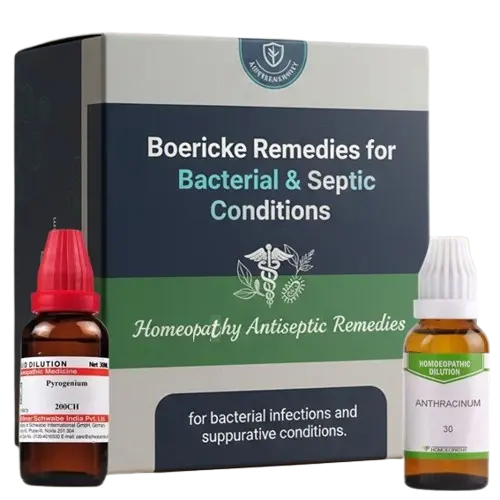

Homeopathic Remedies for Sepsis, Abscesses, and Bacterial Infections
Homeopathic Remedies for Sepsis, Abscesses, and Bacterial Infections
🧪 Boericke’s Materia Medica: Remedies for Bacterial and Septic Conditions
William Boericke’s Materia Medica highlights a range of homeopathic remedies with antibacterial, antiseptic, and anti-septicemic properties. While not antibiotics in the conventional pharmacological sense, these remedies are historically recognized for their role in managing bacterial infections, abscesses, sepsis, and inflammatory states linked to microbial activity. Ideal for practitioners and enthusiasts seeking natural adjuncts to support immune and systemic balance.
Key Boericke Remedies for Bacterial Infections
| Medicine | Indications | Antibacterial/Antiseptic Actions |
|---|---|---|
| Pyrogenium | Septicemia, puerperal or typhoid fevers, infection after surgery, offensive discharges | Described as a “homeopathic dynamic antiseptic,” indicated in blood poisoning, sepsis, and abscess infections |
| Anthracinum | Carbuncles, malignant ulcers, septic inflammation, gangrenous skin lesions | Nosode derived from anthrax bacillus; useful in severe bacterial infections and abscesses |
| Myristica Sebifera | Suppurative inflammation, cellulitis, abscesses, traumatic infections | Boericke called it a "great antiseptic"; reduces suppuration and prevents abscess formation |
| Hepar Sulphuris | Abscesses, boils, cellulitis, pustular eruptions | Stimulates pus formation and promotes drainage in infected tissues |
| Silicea | Slow-healing abscesses, chronic suppurative processes | Promotes expulsion of foreign bodies and toxins; assists healing in chronic bacterial infections |
| Calendula Officinalis | Infected wounds, ulcers, post-surgical injuries | Acts as topical antiseptic promoting healthy granulation and preventing bacterial invasion |
| Calcarea Sulphurica | Abscesses after rupture, slow pus healing | Resolves purulent bacterial inflammation and supports tissue repair |
| Mercurius Solubilis | Suppurative inflammation with burning and foul pus | Classic remedy for bacterial infections involving pus and ulceration |
| Arsenicum Album | Infections with burning, restlessness, septic fevers | Demonstrated antibacterial activity in vitro; used for sepsis, cellulitis, and gangrenous infections |
| Thuja Occidentalis | Gonorrheal infections, post-vaccinal inflammation | Boericke describes “specific antibacterial action” on mucous membranes and infected glands |
| Streptococcinum | Recurrent streptococcal throat or skin infections | Nosode used to treat bacterial inflammation due to Streptococcus infection |
Clinical and Mechanistic Perspective
-
Antiseptic and septic-state remedies: Pyrogenium, Anthracinum, and Myristica sebifera form the cornerstone remedies for septicemia and blood-borne bacterial infection.
-
Suppurative (pus-forming) infections: Hepar sulph, Silicea, Calcarea sulph, and Merc sol. act by stimulating or regulating pus formation, facilitating drainage.
-
Local wound antiseptics: Calendula and Arsenicum album are classical topical or systemic disinfectant remedies in Boericke’s system.
-
Nosode-based approaches: Streptococcinum and Anthracinum represent direct microbial-originated preparations used to counter infections from those same bacterial species.
Thus, in William Boericke’s Materia Medica, the primary antibacterial or antiseptic remedies include Pyrogenium, Anthracinum, Myristica sebifera, Hepar sulph, Silicea, Calendula, Calcarea sulph, Mercurius solubilis, Arsenicum album, Thuja occidentalis, and Streptococcinum — acting as homeopathic counterparts to antibiotic and antiseptic treatments for various bacterial and suppurative conditions.
How to Select the Right Medicine & Potency?
For best results, choose a homeopathic remedy that closely matches your symptoms or follow your doctor’s recommendation.
Suggested Potencies:
✔ Mild symptoms or children – 6C
✔ Acute conditions – 30C or 200C
✔ Chronic conditions or higher potencies (1M & above) – Consult a homeopath for the appropriate potency
A professional homeopath can offer personalized guidance to ensure safe and effective treatment.
| Attribute | Details |
|---|---|
| Size / Presentation | 30 ml sealed bottle(s) |
| Manufacturer | Homeomart, SBL, Schwabe, Simila (any) |
| Form | Drops |
| Unit Weight (approx.) | 75–100 g (individual unit) |
| Potency | 6C – 1M |
| Target Customer | Adults seeking natural homeopathic support for infections, immunity, and bacterial complaints; ideal for those preferring herbal-homeopathic alternatives to antibiotics. |
| Source / Reference | Excerpt from “Lotus Materia Medica” by Robin Murphy MD |
Original: $2.02
-70%$2.02
$0.61Product Information
Product Information
Shipping & Returns
Shipping & Returns
Description
🧪 Boericke’s Materia Medica: Remedies for Bacterial and Septic Conditions
William Boericke’s Materia Medica highlights a range of homeopathic remedies with antibacterial, antiseptic, and anti-septicemic properties. While not antibiotics in the conventional pharmacological sense, these remedies are historically recognized for their role in managing bacterial infections, abscesses, sepsis, and inflammatory states linked to microbial activity. Ideal for practitioners and enthusiasts seeking natural adjuncts to support immune and systemic balance.
Key Boericke Remedies for Bacterial Infections
| Medicine | Indications | Antibacterial/Antiseptic Actions |
|---|---|---|
| Pyrogenium | Septicemia, puerperal or typhoid fevers, infection after surgery, offensive discharges | Described as a “homeopathic dynamic antiseptic,” indicated in blood poisoning, sepsis, and abscess infections |
| Anthracinum | Carbuncles, malignant ulcers, septic inflammation, gangrenous skin lesions | Nosode derived from anthrax bacillus; useful in severe bacterial infections and abscesses |
| Myristica Sebifera | Suppurative inflammation, cellulitis, abscesses, traumatic infections | Boericke called it a "great antiseptic"; reduces suppuration and prevents abscess formation |
| Hepar Sulphuris | Abscesses, boils, cellulitis, pustular eruptions | Stimulates pus formation and promotes drainage in infected tissues |
| Silicea | Slow-healing abscesses, chronic suppurative processes | Promotes expulsion of foreign bodies and toxins; assists healing in chronic bacterial infections |
| Calendula Officinalis | Infected wounds, ulcers, post-surgical injuries | Acts as topical antiseptic promoting healthy granulation and preventing bacterial invasion |
| Calcarea Sulphurica | Abscesses after rupture, slow pus healing | Resolves purulent bacterial inflammation and supports tissue repair |
| Mercurius Solubilis | Suppurative inflammation with burning and foul pus | Classic remedy for bacterial infections involving pus and ulceration |
| Arsenicum Album | Infections with burning, restlessness, septic fevers | Demonstrated antibacterial activity in vitro; used for sepsis, cellulitis, and gangrenous infections |
| Thuja Occidentalis | Gonorrheal infections, post-vaccinal inflammation | Boericke describes “specific antibacterial action” on mucous membranes and infected glands |
| Streptococcinum | Recurrent streptococcal throat or skin infections | Nosode used to treat bacterial inflammation due to Streptococcus infection |
Clinical and Mechanistic Perspective
-
Antiseptic and septic-state remedies: Pyrogenium, Anthracinum, and Myristica sebifera form the cornerstone remedies for septicemia and blood-borne bacterial infection.
-
Suppurative (pus-forming) infections: Hepar sulph, Silicea, Calcarea sulph, and Merc sol. act by stimulating or regulating pus formation, facilitating drainage.
-
Local wound antiseptics: Calendula and Arsenicum album are classical topical or systemic disinfectant remedies in Boericke’s system.
-
Nosode-based approaches: Streptococcinum and Anthracinum represent direct microbial-originated preparations used to counter infections from those same bacterial species.
Thus, in William Boericke’s Materia Medica, the primary antibacterial or antiseptic remedies include Pyrogenium, Anthracinum, Myristica sebifera, Hepar sulph, Silicea, Calendula, Calcarea sulph, Mercurius solubilis, Arsenicum album, Thuja occidentalis, and Streptococcinum — acting as homeopathic counterparts to antibiotic and antiseptic treatments for various bacterial and suppurative conditions.
How to Select the Right Medicine & Potency?
For best results, choose a homeopathic remedy that closely matches your symptoms or follow your doctor’s recommendation.
Suggested Potencies:
✔ Mild symptoms or children – 6C
✔ Acute conditions – 30C or 200C
✔ Chronic conditions or higher potencies (1M & above) – Consult a homeopath for the appropriate potency
A professional homeopath can offer personalized guidance to ensure safe and effective treatment.
| Attribute | Details |
|---|---|
| Size / Presentation | 30 ml sealed bottle(s) |
| Manufacturer | Homeomart, SBL, Schwabe, Simila (any) |
| Form | Drops |
| Unit Weight (approx.) | 75–100 g (individual unit) |
| Potency | 6C – 1M |
| Target Customer | Adults seeking natural homeopathic support for infections, immunity, and bacterial complaints; ideal for those preferring herbal-homeopathic alternatives to antibiotics. |
| Source / Reference | Excerpt from “Lotus Materia Medica” by Robin Murphy MD |